
BCA in Artificial Intelligence specialization prepares students to work at the forefront of
intelligent technologies that are transforming industries worldwide. The program focuses on
machine learning, data science, deep learning, natural language processing, and intelligent
systems development.
Students learn how to design, build, and deploy AI-driven applications through practical
coursework, programming labs, and real-world datasets. The curriculum integrates
mathematics, programming, and AI algorithms with modern tools and frameworks used in
industry....
Through project-based learning and exposure to emerging AI technologies, students develop
the ability to solve complex problems using data-driven decision making and intelligent
automation.
Among Top BCAColleges 𝗼𝗳 𝗦𝘂𝗽𝗲𝗿 𝗘𝘅𝗰𝗲𝗹𝗹𝗲𝗻𝗰𝗲 in India, 𝗚𝗛𝗥𝗗𝗖 BCA 𝗖𝗼𝗹𝗹𝗲𝗴𝗲 𝗦𝘂𝗿𝘃𝗲𝘆 𝟮𝟬𝟮𝟱
Among Top Private BCA Institutes in the South Region , 𝗚𝗛𝗥𝗗𝗖 BCA 𝗖𝗼𝗹𝗹𝗲𝗴𝗲 𝗦𝘂𝗿𝘃𝗲𝘆 𝟮𝟬𝟮𝟱
Among Top Private BCA Institutes in the 𝗞𝗮𝗿𝗻𝗮𝘁𝗮𝗸𝗮, 𝗚𝗛𝗥𝗗𝗖 BCA 𝗖𝗼𝗹𝗹𝗲𝗴𝗲 𝗦𝘂𝗿𝘃𝗲𝘆 𝟮𝟬𝟮𝟱
Among Top BCAColleges 𝗼𝗳 𝗦𝘂𝗽𝗲𝗿 𝗘𝘅𝗰𝗲𝗹𝗹𝗲𝗻𝗰𝗲 in India, 𝗚𝗛𝗥𝗗𝗖 BCA 𝗖𝗼𝗹𝗹𝗲𝗴𝗲 𝗦𝘂𝗿𝘃𝗲𝘆 𝟮𝟬𝟮𝟱
Among Top Private BCA Institutes in the South Region , 𝗚𝗛𝗥𝗗𝗖 BCA 𝗖𝗼𝗹𝗹𝗲𝗴𝗲 𝗦𝘂𝗿𝘃𝗲𝘆 𝟮𝟬𝟮𝟱
Among Top Private BCA Institutes in the 𝗞𝗮𝗿𝗻𝗮𝘁𝗮𝗸𝗮, 𝗚𝗛𝗥𝗗𝗖 BCA 𝗖𝗼𝗹𝗹𝗲𝗴𝗲 𝗦𝘂𝗿𝘃𝗲𝘆 𝟮𝟬𝟮𝟱
Candidates must have completed 10th and 12th standard with a minimum of 50% marks from a recognised board
Personality Enhancement program (PEP)
PEP is designed to guide students to identify personality shortcomings, deepen self-realization, and develop positive belief systems. Curriculum includes Life style and Life skill components.
Research Incubation (RI)
'Research Incubation' Program aims to equip students with critical thinking, problem-solving and research-oriented thinking skills which will enable them to thrive and innovate in the present fast-changing business environment.
Social Immersion program (SIP)
SIP combines on-ground learning with a social cause. Students work closely with NGO’s across India to promote Anti-Pollution Drive, Help Age India, CRY, Bachpan Bachao Andolan, Youth for Seva.
Industry Internship program (IIP)
IIP is a experiential project that provides opportunities for students with reputed brands that enables them to deep dive into the ground reality of business.
Corporate Mentoring (CM)
CM prepares the students for professional careers and the development of their workplace skills. It also helps the students to develop a vision and mission for their personal and career Growth.
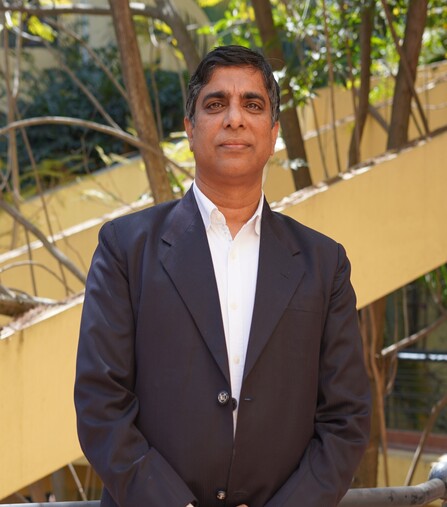
Prof. Arunkumar holds a Ph.D. in Economics from the Institute for Social and Economic Change (ISEC), Bengaluru, sponsored through an RBI doctoral fellowship. In addition to his M.Phil (Central University Pondicherry) and UGC-NET qualifications, he completed his Certificate course in Management from Asian Institute of Management, Manila and completed Certificate Course in MSME credit from Israel. He is also certified in Financial Risk Management by the Chartered Institute of Securities and Investment (CISI), London. In addition, he participated over 200 advanced training programs globally, focusing on finance, banking, policy, leadership and administration.
Prof. Arunkumar’s professional journey began as a faculty of Economics and Commerce, followed by roles as a Research Fellow and Deputy Director at the Centre for Budget and Policy Studies (CBPS), Bengaluru. His career in industry spans across senior leadership roles, including Assistant General Manager (AGM) – Economist at Small Industries Development Bank of India (SIDBI), and key executive positions such as Deputy General Manager and General Manager in the credit and risk management areas. Prof. Arunkumar later functioned as the Chief Risk Officer of a commercial bank in India and international banks abroad. He has also led cross-functional teams, supervised large-scale projects, and introduced policies and processes that enhanced operational efficiency.
In academics, experienced in managing undergraduate, postgraduate and research programs across University and Autonomous business school, with particular focus on enhancing skill-oriented curricula and experiential learning. During this period, developed programs that integrate both theoretical knowledge and practical applications, ensuring students are well-prepared for the business world. He has been teaching subjects related to banking, finance, risk management, development policy and economics. While in Industry, Prof. Arunkumar had been a regular visiting faculty in various training academies and centres of banking and finance.
Prof. Arunkumar’s research covers areas such as access to credit, technology, policy for small enterprises, microfinance, development banking, sustainable finance including sustainable development, and digital financial inclusion. His contributions to academia are reflected in his working papers, journal articles, book chapters, and books. He is also a regular commentator on financial and economic matters in mainstream newspapers.
The recent co-edited book titled: “Institutions and Public Policy for India’s Sustainable Development” was released in January 2025, which was published by Routledge/Taylor and Francis, London.
LinkedIn Profile: https://www.linkedin.com/in/a-v-arunkumar-8b424613/
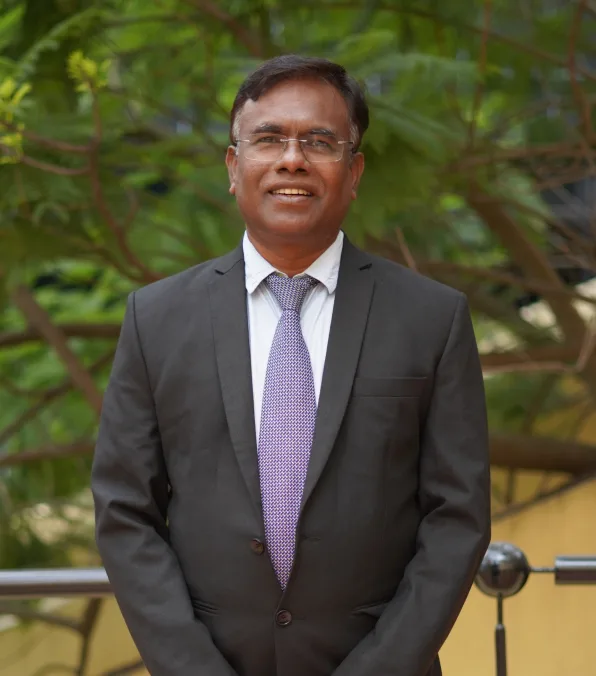
Dr. Moovendhan has over 25 years of experience spanning entrepreneurship, consulting, and academia. Prior to his academic career, he worked with reputed research and consulting organizations such as CRISIL, CMIE and Datamonitor Plc. Also served as a faculty member at VIT Vellore.
Dr. Moovendhan has published over 20 research articles in SCOPUS-indexed journals published by leading international publishers. His research has appeared in prestigious journals such as the Journal of Business Research (JBR), the Journal of Strategic Marketing, and the Economic and Political Weekly (EPW) and granted a patent in Fintech. He primarily teaches Strategic Management and Analytics courses. He is well versed with Outcome based education (OBE) and accreditation process of AACSB and NBA.
Google Scholar: https://scholar.google.com/citations?user=OywFLWcAAAAJ&hl=en
ORCID ID: https://orcid.org/0000-0002-2813-7717
Researcher ID: webofscience.com/wos/author/rid/C-6475-2019
Scopus Author ID: https://www.scopus.com/authid/detail.uri?authorId=57193743909
Google Scholar: https://scholar.google.co.in/citations?user=JCECSfoAAAAJ&hl=en
ORCID ID: 0000-0002-2001-1087
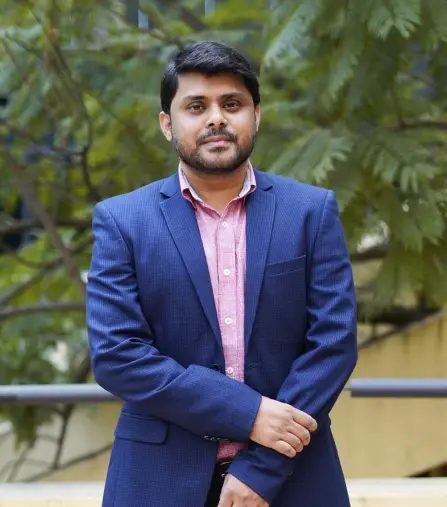
LinkedIn Profile: https://www.linkedin.com/in/ssrikantpatnaik